Written during my late night flight on Friday from Azusa to Portland… They’re done and I’m almost started. These were the hopeful and terrified thoughts that ran through my mind … Continue reading Shoot for the Moon
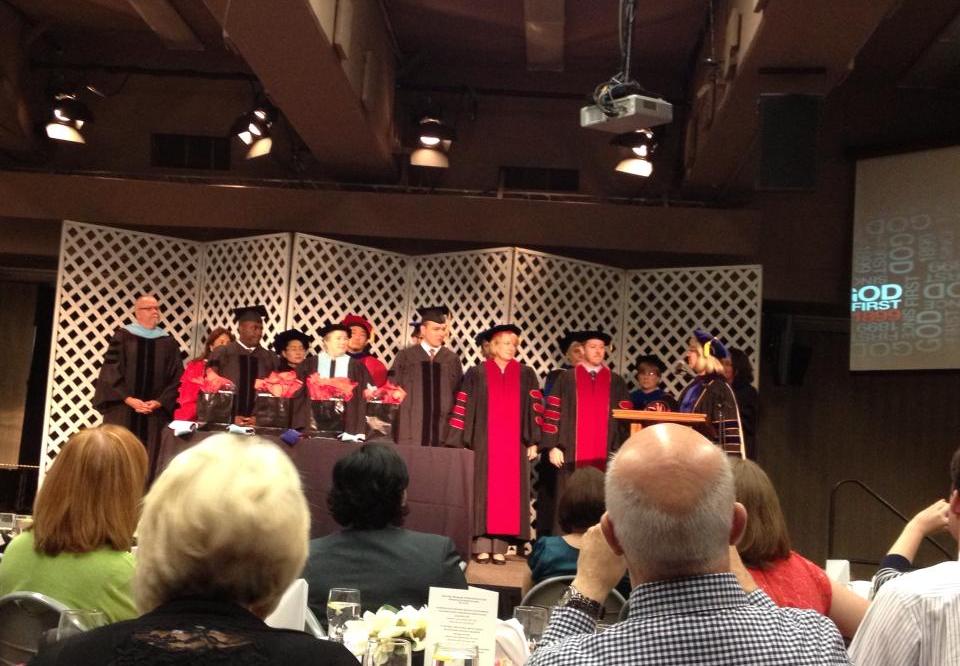
Written during my late night flight on Friday from Azusa to Portland… They’re done and I’m almost started. These were the hopeful and terrified thoughts that ran through my mind … Continue reading Shoot for the Moon
I’m lying on my hotel bed, beside an article I should be reading (and will be soon, I swear), but all I want to do right now is process on paper some of the things floating around in my head. And that’s a good thing because at the start of a doctoral program, there are many pages, words, and blank spaces needed filling ahead of me. Cohort 2013 at Azusa Pacific University received our first syllabus today, and it was almost comical how the room immediately went quiet. Like so many of my students back at Warner Pacific, I immediately flipped to the section on assignments to see what was coming my way in the coming months. Once the four projects, and their basic descriptions were skimmed, the professor’s voice became understandable again (versus the temporary Charlie Brown effect) and the room regain floor, walls and ceiling. This seemed do-able once again. And even better, two of the assignments looked exciting enough that my brain started wondering when I could dive in. The other two…well, they’ll be fine. = )
A significant focus of Azusa Pacific’s program is on developing ourselves and our students through the understanding of our strengths, specifically those discovered through the Strengths-Quest assessment tool. Part of my personality is to seek unique opportunities for myself and to appreciate and want to honor the unique qualities in others, so a learning I will definitely be going through (and look forward to) is understanding how the labels of these strengths fits into my own valuing of the story and context to the individual. I hate the idea of putting someone into a box almost as much as I hate being put in one. We are all so much more than one survey result. And yet I know that this particular tool is being used to help advisors, administrators, professors, students, etc. better communicate and collaborate in colleges around the country. How do having five simple words share the story of someone’s true self? This is not a significant paradox but it is one that I embrace the opportunity to wrestle through.
My words are Achiever, Belief, Developer, Individualization and Strategic. So far the way I understand them and can best explain them is through story…I believe everyone could earn a college degree. If they put in the time, have the support, and believe it is worth the sacrifice, I have that core belief in my fellow men and women. That graduation stage is like the finishing line of a marathon. Every person in the race must put their own foot down for it to count, but they can run, walk, skip or crawl if they have to and it will count. And if everyone succeeds / graduates / finishes, that in no way diminishes from the journey of the others. In fact, each person can support another through their words, their compassion and their random acts of kindness along the way. It is the responsibility of the individual to finish their degree, and it will be their success when it is done, but the entire community can struggle and celebrate with them along the way. (okay, my story needs work but the article beside me needs reading more so I’ll have to play with this more another day).
This is my do-over post for the weekend. Last spring I had to complete a do-over run after a miserable experience on the roads that left me wondering why I had laced up, and after hitting “Publish” yesterday, I walked out of the coffee shop with the same feeling.
—
Student C emailed me two weeks ago a short email. Just two lines really. She was not going to be able to come back to school due to money. And she had passed math, a major hurdle at her previous school and a cause of stress throughout the fall. I couldn’t believe my eyes. C and I had been working together throughout the fall, meeting, talking and just getting to know one another through the school. During our final meeting before Christmas, I felt like I was just beginning to know her. That last session included more of her family story than I had ever heard before. In that conversation, I realized what a warrior spirit was sitting beside me and I was excited to grow from one another this spring. And now, an email that took less than a minute to read was changing everything.
I asked for details from C as well as checked in with a staff member to see if this could possibly be true after all of her hard work. After a few emails back and forth, C asked if we could meet and I quickly agreed. This had to be a mistake.
We sat together in my office, and within a few minutes I had to close the door as tears slowly ran down her face. There was no mistake. A few phone calls with another department confirmed there were only two ways for C to stay in school and both options required parental help. In talking with C it was obvious that the parental help was not going to happen. That small window I saw through in December was still just as dusty as before. One parent could not, in their opinion, help financially and the other had not been there before and would not start supporting now. I sat there, trying to find word and plans of encouragement as I saw hope escaping the conversation. I wanted to speak a new vision into the room, a view that did admit to this road block but was not stopped by it. I had to hold on for the girl, the woman before me who was just holding herself together.
Our conversation ended with a plan for the next step, but nothing solid for the one beyond it, the one that truly mattered. For the rest of the week, that conversation loomed in the back of my mind, leading to prayers and tears for how financial aid, education, and parental responsibility ought to support a warrior spirit. The conversation, and the loss in C’s eyes, hurt and still hurt.
And yet, there is goodness in that hurt. That pain means our relationship was more than an item on a check list. That pain means two strangers really can care for one another over a short period of time. That pain means that even with other work struggles and responsibilities, there is room to care about the individual.
“If you prick us do we not bleed? If you tickle us do we not laugh? If you poison us do we not die? And if you wrong us shall we not revenge?” (William Shakespeare).
If you feel pain, do we not love that much more fiercely? (Meg DuMez)
Student C, we are not done.
A few weeks ago I had the opportunity to travel to Boston for a conference on higher education. I was getting to present on student development for adult education, a topic heavy on my heart as I see missed opportunities and great needs among my students each day. I only had a few weeks to prepare so it was a bit of a manic push at the end as I was grading papers, responding to student needs, and trolling the internet trying to find a non-traditional program that offered services outside of curriculum, financial aid, and tutoring. I only came across a few offerings during that time but I have a whole doctoral program to research and hopefully find more.
The conference was quick, just a day and a half, but a great experience with some encouraging take aways and a laughter-filled dinner with a few coworkers. The three hours stuck at an airport in Chicago and a stressful night with unconfirmed hotel reservations were absolutely worth it. And my presentation even went well. I was the last speaker of the conference so I lost a few folks who had to catch flights but those who were there were engaged and listening, and I’m pretty sure I remembered to breathe the whole time (which was a tricky thing for me when I first started teaching). The focus of the presentation ended up more on dreaming a bit together rather than sharing best practices, since practices don’t exist quite yet. But maybe next time I’ll get to share more examples and less “what ifs.”
After the conference ended and my friends scattered to airports or other destinations, I realized I was across the country from friends and family, in a very large city without a car, and having a nice little panic attack as I questioned my sanity about sticking around this city for two extra days. What had seemed like a simple idea a few months before was suddenly very real and very not simple. I didn’t know where to go or what to do…so I just grabbed my running gear and hit the road.
Over the next few hours I became intimate friends with the Back Bay area of Boston, especially with the Boston Common (a park where the Freedom Trail begins). I wandered up and down streets, choosing my directions based on “oh that looks pretty” and then coming back again, knowing I had a phone, a map, and a debit card in my pocket. I felt like a local, jogging around shoppers, tourists, and commuters alike. I even had someone ask me for directions! When I wandered back in the area the next day in more tourist garb, it was no longer a stranger but a road I had run down just 18 hours before.
On my second day I hiked the Freedom Trail and visited Harvard, and on the last morning I joined a running group for the trail a last time, but it was that first run, those 7 miles of wandering, that broke the ice. I had to get through the first awkward blind date with Boston to enjoy a bit of a “summer” romance with the city. And yes, I do hope to see him again for the Boston Marathon, but probably not for a few years. After all, I have a pretty serious relationship with the streets of Portland. We’ve been running together for almost 3 years and I’d hate to miss out on where we might wander next.
St. Francis of Assisi once said, “Preach the Gospel at all times; if necessary use words.” A few generations later, John Lennon explained that “Life is what happens while you’re making other plans.” I believe that somewhere between these two famous men is the concept of academic ministry.
I’ve been defining and refining this concept in my own life and work for over five years now, since I started my working life as a Records Office Assistant. My daily tasks primarily included transcript evaluations, printing transcripts, recording grades, directing foot traffic, and processing add/drop paperwork. I met with almost every student, faculty, and staff member from campus, as well as prospective students and alumni who needed paperwork completed or had wandered into the wrong area of Egtvedt. I loved the variety of questions, tasks, and people to work with. What I didn’t love was that all of these interactions were often 5 minutes or less, and that my role was primary to make some predetermined goal take place, not to enter into conversation about the purpose and implications of that goal. And there were many times, especially during the quiet summer months, that I was quite bored. During the slow times, when all of the grad checks, transcript requests, and evaluations were completed, I would work on archive transcripts. Oh yes, my free time project was doing data entry for students who had attended the college more than 30 years prior. To keep myself relatively sane, I looked at these transcripts in the same way that I had once looked at a blank page in a coloring book: it was not truly “alive” until it was complete. As a child, I had to be careful with my color decisions because whatever character or creature I was coloring would be that shade of blue forever. And now I had a duty to Joe Student to enter his grades correctly because that made his history real and forever.
If you’ve read this far then you may be wondering what archive transcripts and data entry has to do with ministry. My proposal is that academic ministry is what happens thru the paperwork, through the data. For four years I’ve served as an Academic Counselor to a rich variety of students. Some have been open about their goals for their education, shared about their families, and been friendly during interactions no matter how significant or trivial. Others have mentioned tuition costs in every email, questioned the ethics of the staff, or coyly mentioned a friend in the legal field. They all worked with me because they wanted to graduate, and my role with paperwork was what got them there. These students contacted me for a task oriented purpose, but I believe we can offer them so much more.
For example, in one of my cohorts there were a husband and wife who came in for degree planning. They took turns with one in the car while the other came into my office (if I had realized the arrangement at the time I would have suggested a more air-conditioned option, but hindsight is 20/20). I met with the wife second, I believe, talked through her course needs, which were minimal, asked about her experience so far, and chatted a bit about her work. The conversation was not too memorable and we made plans for how she would be able to graduate on time. All was set, done, and happy to move forward.
Over a year later I learned from classmates and current instructor that this student’s mother had died while she was in class. I was invited to the funeral, as was the rest of the class, a week later. I had to go. There really was no question, because if there was I would have found a pathetic, but acceptable, excuse not to drive 40 minutes for a funeral on a Saturday afternoon while family was in town. But I had to go; I just didn’t know why yet.
The why became clear at the end of the service, as the attendees stood in a circle for the benediction. I had been listening to stories for over an hour about a good woman who was truly loved by family and will be missed. And now for the first time I was standing next to my student, who noticed me there for the first time. In her eyes was complete shock. I had not RSVP’d or anything for this event, and the invitation was general not just to me, so she stared at me for about 10 seconds with confusion slowly shifting to appreciation. In that moment, and for the rest of the benediction as she hugged me, I was not Meg, I was not her Academic Counselor; I was her school embracing her.
A few weeks later she sent me a card, “I remember when you mentioned to our cohort about some student thinks you a ‘stalker.’ Hahaha. I really don’t mind that now especially not that I know how passionate you are with the students you adviser. Thank you so much for being there for me and my family.”
I share this story for the same reason that I share about entering archive transcripts. I came to know this student through the paperwork, through the data that can get so boring and so tedious. But without that paperwork, this student would have never walked into my office; I would never have had the beginning of a connection to serve her later through. Once upon a time those transcripts gave me connections too; brief ones to history and to the potential future. And the classroom is the same balance of required attendance, reading, and assignments which leads to discussion, enlightenment, and hopefully transformation. We as humans have goals, such as to earn a degree and get a better paying job, and those wants help us to get to our true needs, like to connect with another human and find more meaning to life than just a paycheck.
Academic ministry is preaching the gospel through the planning of a life.
The adventures of DaddyBird and Kangayayaroo as they move from the United Arab Emirates to Shanghai, China, and venture to explore the Eastern hemisphere from there.
Jarman Party of 9
Some sass, class, and a big ole... HEART. Sparkle filled thoughts of a dreamer.
Weight Loss Coach
Living life one pair of running shoes at a time.
living, dancing, running, loving life...
Steven Colborne's Philosophical Theology Blog
Self-improvement blog for overweight individuals with articles on weight loss, getting healthy, physical fitness, running, recipes, meal plans, chasing values and crushing goals.
"The miracle isn't that I finished. The miracle is that I had the courage to start." - John J. Bingham
"The miracle isn't that I finished. The miracle is that I had the courage to start." - John J. Bingham


 Starting Line Miracles